AI
What Kled Reveals About the Shift from Data Collection to Intelligence Activation
Jan 15, 2026
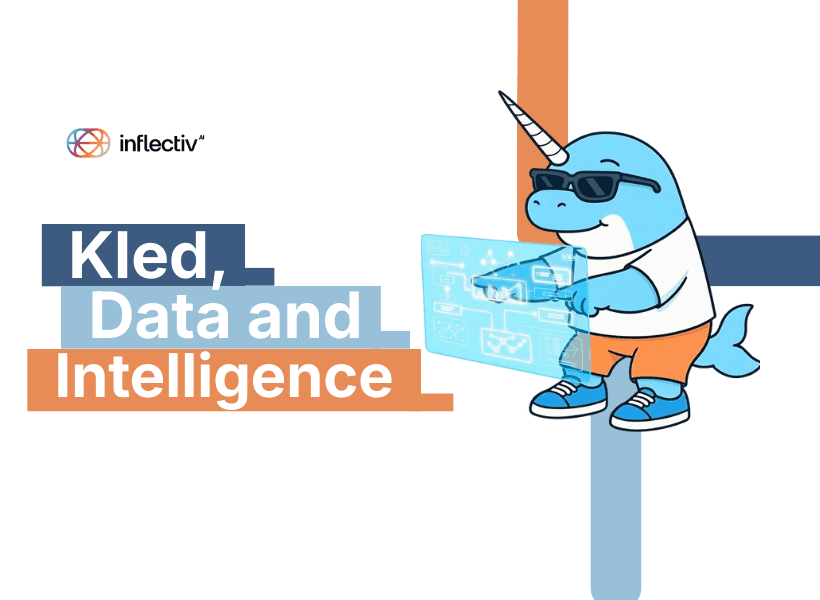
For much of the last decade, progress in AI followed a familiar formula: collect more data, train larger models, and intelligence would emerge.
That approach delivered extraordinary gains. Scale unlocked capabilities that once felt unreachable. But as AI systems move beyond research and into real-world use - into agents, workflows, robotics, and operational decision-making - the limits of that model are becoming clearer. The question teams are now asking is no longer simply how much data they have, but what happens to that data once it’s been collected.
This is the context in which platforms like Kled AI have gained attention. By paying contributors for opt-in data - including harder-to-source and edge-case inputs - Kled has helped bring an important issue to the surface: data has value. It doesn’t appear for free, and contributors should be compensated transparently. That alone represents meaningful progress for the AI ecosystem.
But it also exposes a deeper shift that’s now underway.
When Collection Is No Longer the Bottleneck
Across AI labs and builder communities, the conversation is changing. Teams are no longer constrained primarily by raw volume. Instead, they are searching for data that is:
domain-specific and high quality
representative of real-world edge cases
multimodal and grounded in operational systems
consented, attributable, and traceable
This shift is most visible in areas like robotics, autonomous agents, compliance, and financial workflows - environments where small ambiguities compound quickly and opaque reasoning becomes a liability.
Data collection platforms play a critical role here. They surface gaps, create new supply, and make the economics of contribution explicit. But once data is collected, another limitation becomes apparent.
Data Is Often Consumed - and Then Lost
In most AI systems today, data is treated as an input rather than an ongoing asset.
It is uploaded, labeled, embedded, or trained on. Once it enters a pipeline or model, it largely disappears as a distinct, referenceable entity. For traditional training workflows, that can be sufficient. For systems that operate continuously - agents that reason over time, call tools, and make decisions - it becomes a problem.
These systems don’t just need to learn once. They need access to intelligence that remains queryable, attributable, and visible as it is used. Without that persistence, context erodes and reasoning becomes brittle.
This is where the distinction between data and intelligence starts to matter.
Why Ownership and Visibility Change the Equation
Labeling improves usability, but it doesn’t address what happens after data is consumed. Most systems still lose visibility into where information is used, how often it is accessed, or which applications depend on it. Contributors are paid once, then removed from the value chain.
As AI systems become more agentic, failures increasingly stem from missing context and lost provenance rather than a lack of raw inputs. What’s needed is intelligence that can remain present within systems - something that can be referenced again rather than absorbed and forgotten.
Just as importantly, what’s needed is a way for data owners to remain connected to the downstream use of what they contribute.
How Inflectiv Approaches This Layer
At Inflectiv, we focus on what happens after data is collected.
We structure datasets and knowledge into tokenised intelligence assets that remain owned by their contributors. These datasets can be updated over time, allowing them to grow or be refined while maintaining continuity. Access happens through the protocol, which means intelligence doesn’t disappear once it’s used.
Contributors retain visibility into how often their datasets are accessed and where they are integrated at a system level. While Inflectiv does not dictate how downstream systems reason or act, it ensures that intelligence remains referenceable and economically connected as it participates in live workflows.
That persistence fundamentally changes the role intelligence plays. Instead of being a one-off input, it becomes an asset that can support repeated use across time and applications.
Tokenisation and the Emergence of New Intelligence Economies
Tokenisation introduces another important shift.
When intelligence remains owned and usage-based, contributors are no longer forced into a single sale event at upload. Value accrues through adoption and reuse, not just submission. This changes incentives from optimizing for volume to optimizing for usefulness.
Over time, this creates the conditions for new micro-economies to emerge around intelligence itself. Certain individuals or groups become known for producing datasets that agents and workflows consistently rely on within specific domains. Reputation forms through repeated use rather than promotion. Revenue follows trust and utility, not speculation.
Inflectiv doesn’t enforce these dynamics. It enables them by keeping intelligence owned, visible, and economically linked as it is used. The economies that emerge are a result of behaviour, not marketing.
A Broader View of the Stack
Seen this way, data collection platforms and intelligence activation layers are not competing approaches. They sit at different points in the stack.
Platforms like Kled help surface valuable data and make contribution economics explicit at the point of collection. Activation layers like Inflectiv focus on ensuring that once intelligence enters AI systems, it remains usable, traceable, and aligned with its contributors over time.
Both are necessary. They solve different constraints at different stages of the AI lifecycle.
Looking Ahead
The AI ecosystem is maturing. The emphasis is shifting from collection alone to what happens after - from static datasets to intelligence that can persist inside live systems.
As agents, autonomous workflows, and robotics become more common, the infrastructure that endures will be infrastructure that treats intelligence as something referenceable rather than disposable.
Data collection brings intelligence to the surface.
Activation ensures it doesn’t vanish once it’s used.
That transition is already underway - and it’s where the next phase of AI infrastructure will be built.
Join the AI Revolution
Over 2500 agents and 3000 datasets are already fueling the future of AI. Don’t get left behind!

Copyright © 2025 Inflectiv AI.
Join the AI Revolution
Over 2500 agents and 3000 datasets are already fueling the future of AI. Don’t get left behind!
Copyright © 2025 Inflectiv AI.
Join the AI Revolution
Over 2500 agents and 3000 datasets are already fueling the future of AI. Don’t get left behind!
Copyright © 2025 Inflectiv AI.