AI
Manus x Similarweb didn’t invent data monetization
Jan 15, 2026

It accidentally proved Inflectiv’s thesis
Written by David Arnež, co-founder at Inflectiv.ai
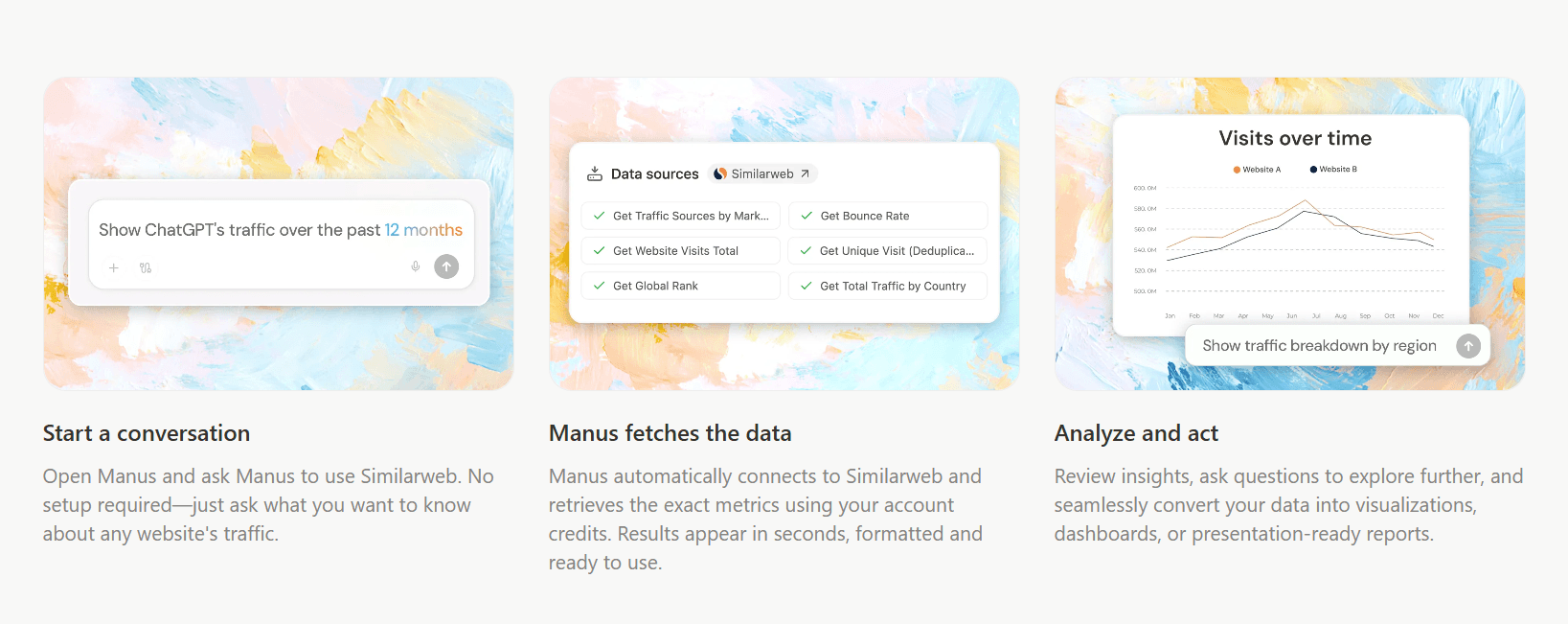
This week, Manus AI announced its first data partnership with Similarweb, allowing Pro users to query 12 months of web traffic data directly inside an autonomous agent interface.
Check It Out Here’s For More Info
On the surface, this looks like a clean product win:
Natural-language access to competitor benchmarks
Instant visualizations of traffic trends, regions, and devices
Hours of manual research compressed into seconds
A clear willingness from Similarweb to pipe proprietary data into AI workflows
Markets liked it too. Similarweb’s stock moved roughly 5% on the announcement. But if you zoom out, this isn’t innovation. It’s validation. Not of Manus. Of the underlying economic shift Inflectiv has been calling for over a year.

What actually changed here (and why it matters)
Strip away the demo video and the PR gloss. Three things happened:
A proprietary data owner agreed to expose structured data directly to agents, not dashboards.
Access was monetized, not via raw downloads, but via controlled, query-level usage.
The value moved upstream, from “analytics UI” to “intelligence as a service.”
This is the key point most people are missing:
Similarweb didn’t sell data.
It sold ongoing, queryable intelligence.
That distinction matters. Because once data is being consumed by agents, not humans, the old SaaS logic collapses.
This is the end of “data as a feature.”
Historically, data businesses worked like this:
Collect proprietary data
Wrap it in dashboards
Sell seats to humans
Lock value inside UI
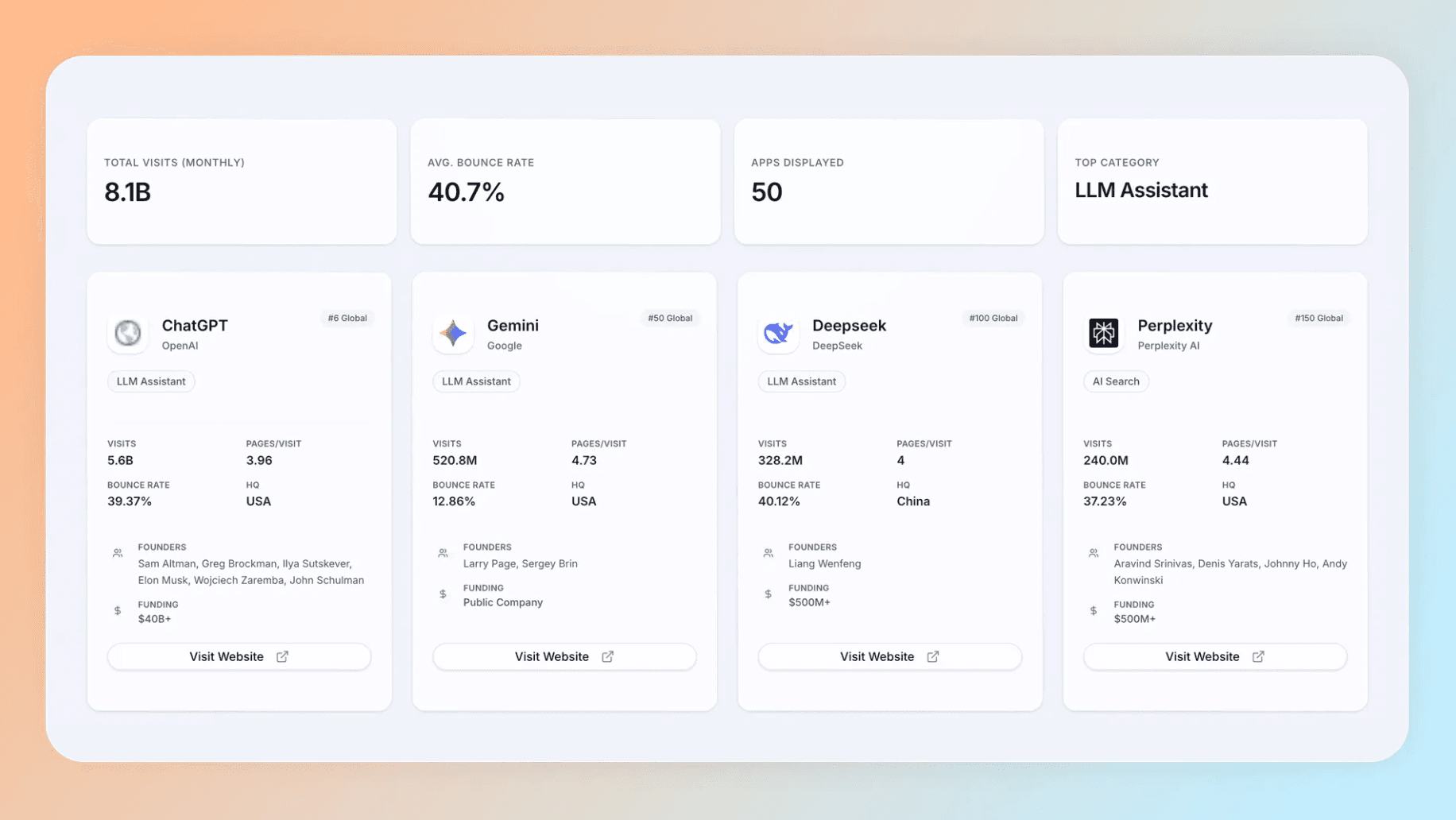
Manus breaks that model unintentionally. The moment data becomes agent-consumable:
UI stops being the moat
Seats stop being the unit
Queries, workflows, and downstream usage become the value surface
This is exactly where most AI agent deployments fail today. Not because models are weak, but because intelligence is:
Locked in PDFs
Buried in private databases
Fragmented across tools
Unattributable
Non-monetizable at the usage level
Manus solved this for one dataset, owned by one company, under one bilateral agreement. Inflectiv solves this as infrastructure.
Why this is a local maximum, not the endgame
Here’s the uncomfortable truth for Manus-style integrations:
They don’t scale permissionlessly
They don’t generalize across data owners
They don’t create liquidity
They don’t compound
Every new dataset requires:
Legal negotiation
Custom pipelines
Manual pricing decisions
Centralized control
That’s not an economy, more like a consultancy wrapped in an agent UI.
Inflectiv’s thesis was never “agents need data.”
It was “data needs an economic primitive.”
Inflectiv’s core claim is not philosophical. It’s mechanical.
AI agents require structured, attributable, monetizable intelligence to function at scale.
Not files. Not dashboards. Not APIs duct-taped together. It needs assets.
Inflectiv turns data into:
Structured intelligence
Tokenized ownership
Query-level monetization
Composable access control
Perpetual creator rewards
A dataset on Inflectiv isn’t “integrated” → it’s activated and once tokenized, that intelligence can be:
Queried by any agent
Embedded into any workflow
Used across chains, apps, and enterprises
Monetized automatically, forever
No custom deals. No UI dependency. No centralized gatekeeper.
Similarweb just demonstrated the demand Inflectiv is built for
Let’s be blunt. If Similarweb is willing to expose 250 billion monthly data points directly to agents today, then:
Enterprises already want this
Data owners already see the upside
Investors already understand the leverage
What’s missing is not belief → it’s infrastructure. Manus x Similarweb is a preview of the demand curve.
Inflectiv is the supply layer that makes it scalable.
The real signal investors should be watching
The most important takeaway isn’t the demo. It’s the direction of value flow.
Data is moving out of dashboards
Intelligence is moving into agents
Monetization is shifting to usage
Ownership is becoming programmable
This transition will not be captured by point integrations, but it will be captured by the protocol that makes intelligence liquid. That is the thesis Inflectiv has been building toward. And this announcement didn’t challenge it. It quietly confirmed it.
Final reality check
Manus proved agents want intelligence, and Similarweb proved data owners will monetize it. Inflectiv exists because neither of them wants to rebuild the global intelligence economy from scratch.
That work has already started.